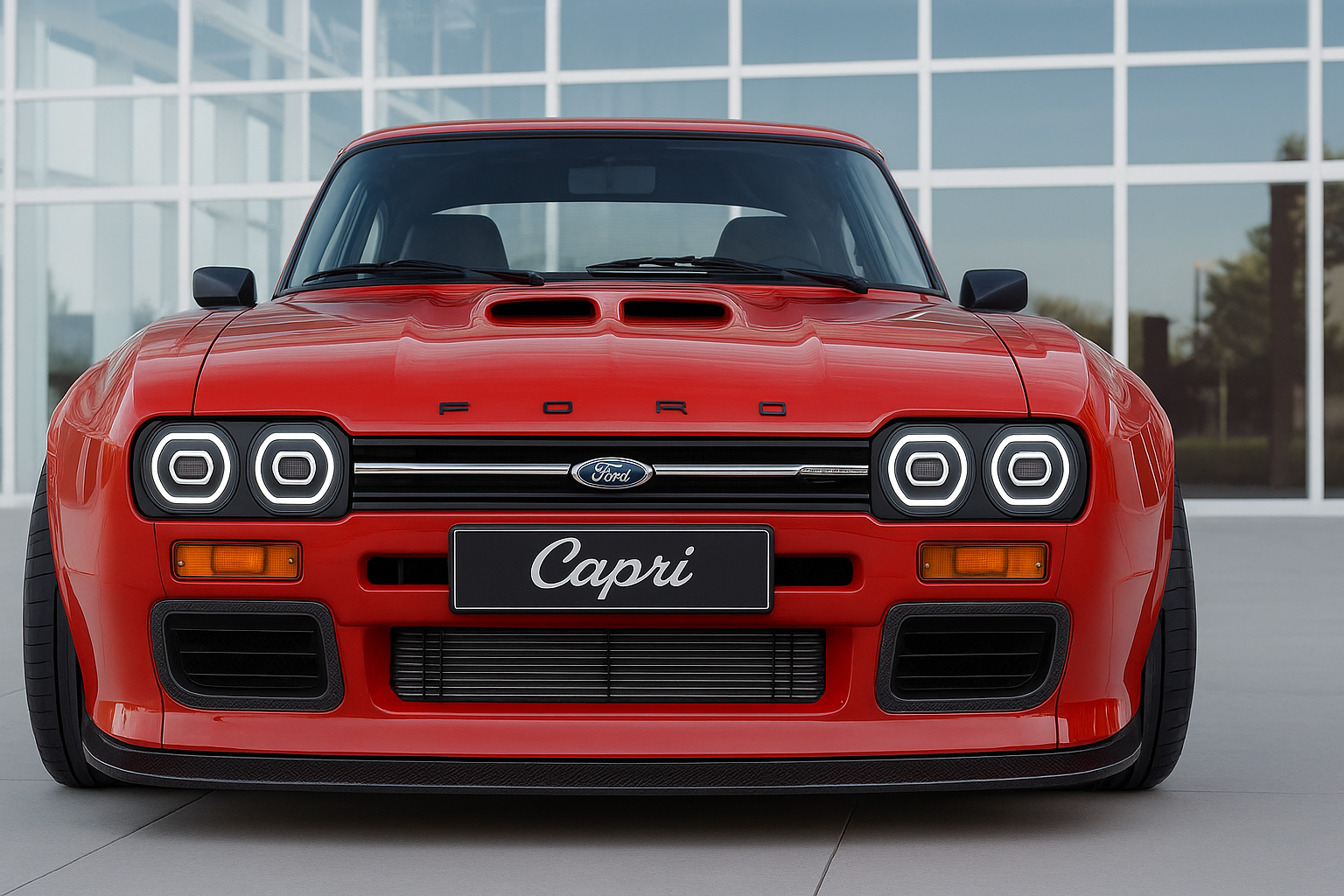
Ford has officially revived the Capri nameplate for 2026, but not as a retro throwback. Instead, the iconic badge returns as a fully electric vehicle built for modern global markets, including the United States and Australia. The new Ford Capri blends emotional design, everyday EV practicality, and advanced safety technology into a package aimed at drivers who want something stylish yet forward-looking.
A Bold Electric Design with Real Character
The 2026 Ford Capri immediately stands out with a design that feels confident and expressive. Its sleek LED headlights, clean closed-off front fascia, and sharply sculpted body lines give it a futuristic presence without losing personality. The coupe-inspired roofline adds a sporty edge, while the balanced proportions make the Capri feel more dynamic than many conventional electric crossovers. Ford’s focus here is clear: make the Capri visually exciting, not just efficient.
Smarter Cabin Designed for Modern Drivers
Inside, the new Capri delivers a refined and uncluttered cabin that feels intuitive from the first drive. A large central touchscreen anchors the dashboard, handling navigation, connectivity, and vehicle controls, while a fully digital instrument cluster keeps driving information clear and distraction-free. Quality materials, improved sound insulation, and ambient lighting create a comfortable environment suited for both city commutes and long-distance highway driving.
Electric Performance Tuned for Everyday Confidence
The 2026 Ford Capri uses a fully electric powertrain designed to deliver smooth, responsive performance rather than aggressive numbers. Instant torque makes urban driving effortless, while quiet highway cruising reinforces its premium feel. Ford has tuned the suspension to balance comfort and stability, ensuring the Capri feels composed on both crowded city roads and open highways across large regions like the U.S. and Australia.
Practical Range and Fast-Charging Support
Range and charging convenience remain critical for EV buyers, and Ford addresses both with competitive driving range expectations and fast-charging capability. The Capri is designed to recover usable range quickly during charging stops, making it suitable for daily use as well as longer trips. This practical approach positions the Capri as an electric car that fits real-life driving habits, not just short urban runs.
Technology That Feels Useful, Not Overwhelming
Technology inside the Capri focuses on usability rather than complexity. Smartphone integration, navigation, voice commands, and over-the-air updates come together in a system that feels responsive and easy to learn. Connected features allow drivers to check vehicle status remotely, adding everyday convenience without unnecessary digital clutter.
Global Safety Technology for Modern Roads
Safety is a core part of the Capri’s appeal. Ford equips the 2026 Capri with advanced driver-assistance systems designed to meet global standards. Features such as adaptive cruise control, lane-keeping assist, automatic emergency braking, and blind-spot monitoring help reduce driving stress in busy traffic and long highway journeys. These systems work quietly in the background, enhancing confidence rather than distracting the driver.
A Strategic Electric Comeback for Ford
The return of the Capri represents more than nostalgia. It reflects Ford’s strategy to revive iconic names while embracing electric mobility. By targeting the U.S. and Australian markets, Ford positions the Capri as a stylish alternative for buyers who want an EV that feels different from traditional electric SUVs or sedans.
Expected Price and Market Availability
While Ford has not officially confirmed pricing, early expectations suggest the 2026 Ford Capri could start around USD 45,000, with higher trims priced above that depending on battery size and technology features. The electric Capri is expected to launch across global markets during 2026.
Disclaimer : This article is based on early launch information and industry reports. Final specifications, range, features, and pricing may vary by market.